
In this section
To defeat a system that holds you hostage, you first have to understand its wiring. So let’s strip away the jargon and explain what the bond market is, how it operates, and why it currently strangles long-term investment in this country.
The main way the UK government currently finances its long-term infrastructure is by selling bonds, traditionally known as gilts. It is a simple mechanism. The Debt Management Office, an arm of the Treasury, sells a bond with a face value of, say, £100. An investor buys it, handing over £100 in cash.
Every bond comes with a fixed expiry date and a fixed interest rate, known as the “coupon.” If you buy a £100 ten-year bond with a 4% interest rate, the government is legally bound to pay you £4 every year, usually in two instalments of £2, for a decade. When the ten years are up, the bond matures, the government cancels the ledger entry, and pays you back the original £100. Gilts come in different term lengths, too, from 1 year maturity bonds up to 30 years, and occasionally even longer.
Crucially, the interest rate set on that day never changes. It is a fixed-rate obligation. So when interest rates go up, or down, the cost of existing government debt does not change. Only the issuance of new bonds is affected by the current price.
So why do politicians live in terror of “bond vigilantes”? Because once these bonds are issued, investors buy and sell them among themselves on a secondary market. It is a global casino.
Bonds are treated as “near-cash” assets. Big corporations, multinational banks and hedge funds do not keep billions of pounds sitting in standard bank accounts earning miserable interest. They park their cash in UK government bonds because the British state cannot go bust: it has the exclusive legal right to print its own currency.
UK pension funds are the largest domestic holders, and not out of caution. The structure obliges them.
A defined benefit scheme knows roughly what it owes its members decades ahead. The Pensions Regulator requires trustees to fund those promises to a standard called low dependency: the scheme’s funding position must be highly resilient to short-term market movements, and its assets must carry enough liquidity to meet both expected and unexpected cash calls. Few assets do all of that. Government bonds do.
The Regulator’s own worked example of a compliant portfolio is 85% gilts and other bonds. And the discount rate used to judge whether a scheme is adequately funded is itself defined as gilts plus half a per cent. Pension trustees are not legally compelled to buy gilts. But they are measured by a yardstick made of them.1
The danger arises when these bonds are actively traded. If the government issued a £100 bond at 0.125% interest during a low-rate era, that bond pays 12.5p a year. If interest rates later rise, nobody on the open market will pay £100 for a bond that pays 12.5p when they can buy a new one paying £4. So traders discount the price of the old bond, driving its market value down.
Here is the game theory at play. Just like the characters in the film Margin Call, these international traders act exclusively in their own short-term self-interest. That’s their job. They do not consider British public services, regional inequality or child poverty. They respond strictly to momentum, supply and guessing what everyone else will do.
So who actually owns all these bonds?
Not, for the most part, the people politicians appear frightened of. The Bank of England holds around 18% of gilts, down from about a third at the peak of quantitative easing, and falling as it sells. Roughly half sits with British institutions — pension funds, insurers, banks. These are captive buyers, held in place by the structure described above.
That leaves about a third with overseas investors.2
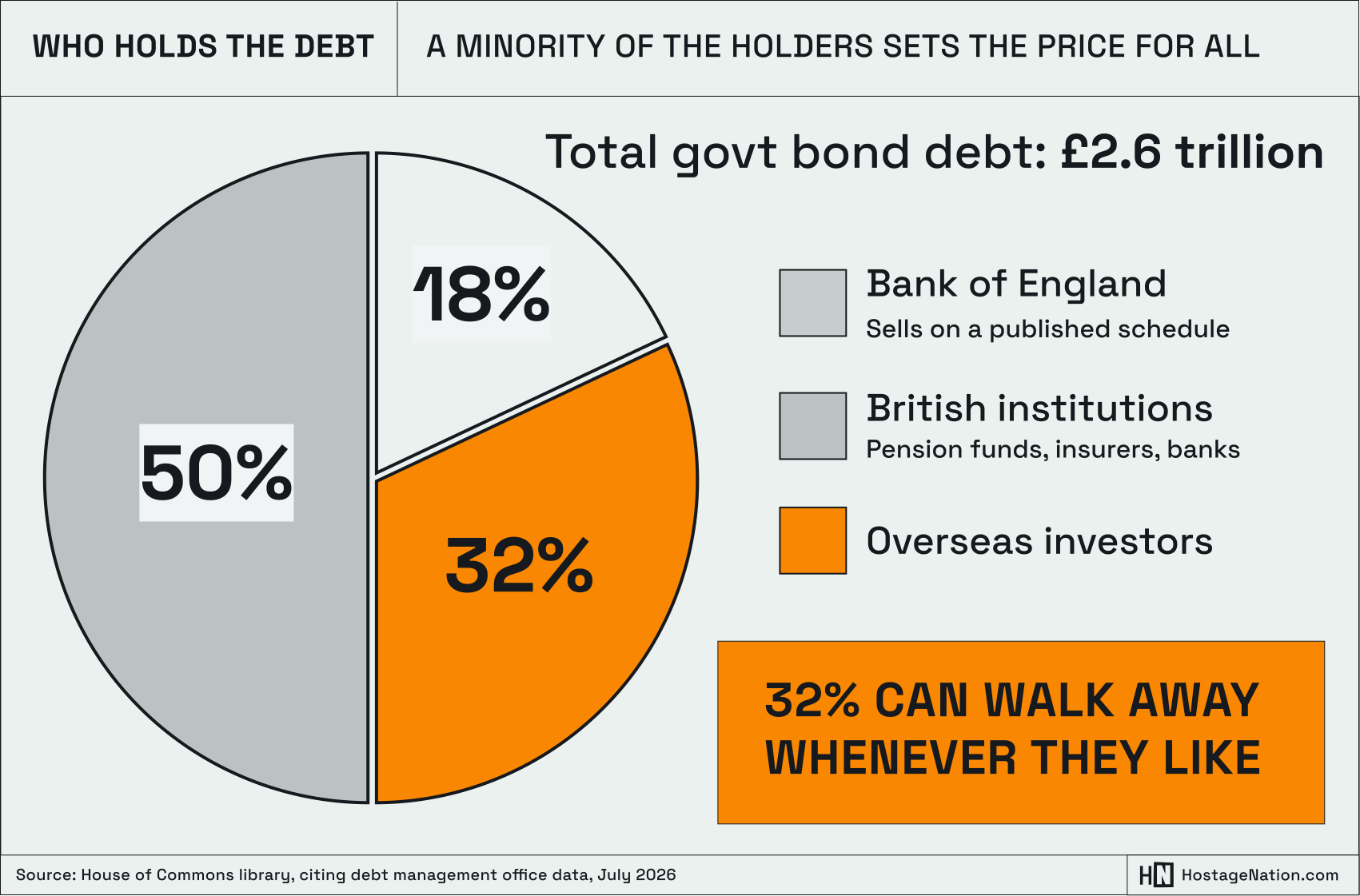
Here is what matters about that third. Prices in any market are set at the margin, by whoever is trading today, not by who is sitting still. The captive half rarely trades. The Bank of England sells on a published schedule. So the price of new or reissued British government debt — and therefore the interest rate this country pays — is set by the one group that can walk away whenever it likes.
“A minority of the holders. All of the leverage.”
That is the sword hanging over every Chancellor’s desk. Not the size of the debt. The mobility of a third of it. What’s more, the attractiveness of buying or selling it is affected by factors far beyond UK government policy. If another investment with a better return comes along, they can still sell, lowering the prices. A rate rise in Washington. A panic in Tokyo. A war that sends money running for gold. None of it comes from UK policy. All of it can move the price of UK debt.3
By funding our national investment strategy through this secondary casino, successive Chancellors have handed that third a veto. Not over the detail of policy. Over whether we build the railway, the hospital, the school. That is what turned the British electorate into economic hostages.4
- The Pensions Regulator’s Defined Benefit Funding Code of Practice, in force since late 2024, and the funding regulations of April 2024. The regulations require scheme assets to be invested so that the funding position is highly resilient to short-term adverse changes in market conditions, and with sufficient liquidity to meet both expected and unexpected cash flow requirements. The Regulator’s illustrative low dependency allocation is 85% corporate bonds and gilts to 15% growth assets, and the low dependency discount rate is set at gilts plus 0.5% per annum. The Regulator is explicit that there is no requirement to invest in line with low dependency and no restriction on trustees investing in line with their fiduciary duties; the point made here is that the regulatory yardstick is denominated in gilts, not that gilt-holding is mandated. Elements of the regime were revised in response to the gilt market volatility of autumn 2022. ↩︎
- House of Commons Library, citing Debt Management Office data on the distribution of gilt holdings, June 2026. The Bank of England holds around 18% of gilts, down from a peak of about 34% in 2022, with around a third held by overseas investors and the remainder principally by UK pension funds, insurance companies and banks. ↩︎
- Gilt yields move with US Treasury yields and Federal Reserve policy, with global risk sentiment, with expected sterling weakness, with competing sovereign issuance from the US, Germany and Japan, and with credit rating actions by agencies based outside the UK. Bank of England, Financial Stability Report, and IMF, Global Financial Stability Report, on international spillovers into UK gilt yields. ↩︎
- Gilts are issued by the UK Debt Management Office, an executive agency of HM Treasury established in 1998 to separate debt issuance from monetary policy. The Bank of England performed this function before that date. ↩︎